


What can logistics specialists in Russia expect in 2025?
We discuss trends in transport and warehouse logistics: digitalisation, automation, the development of new hubs and localisation.
In 2025, the Russian logistics market will undergo changes related to technological innovations, transforming consumer habits, and global economic and political trends. In this article, we will look at the trends that will shape the industry's development this year.
1. Digitalisation and the introduction of new technologies
Digitalisation remains a steady trend in transport and warehouse logistics. According to SberCorus, the share of digital solutions in logistics will reach 29% this year. Companies are using intelligent transport systems (ITS) to track cargo in real time, optimise routes and minimise delivery times.
The following technologies will remain relevant in 2025:
IoT (Internet of Things) — sensors placed on vehicles and in warehouses collect data on the location, condition, temperature and other parameters of goods.
Artificial intelligence (AI) and machine learning — used to analyse big data and optimise warehouse operations, forecast demand and plan routes.
Blockchain — provides transparency and security for transactions, allows you to track the movement and origin of goods, and reduces the likelihood of errors in documentation.
2. Process automation
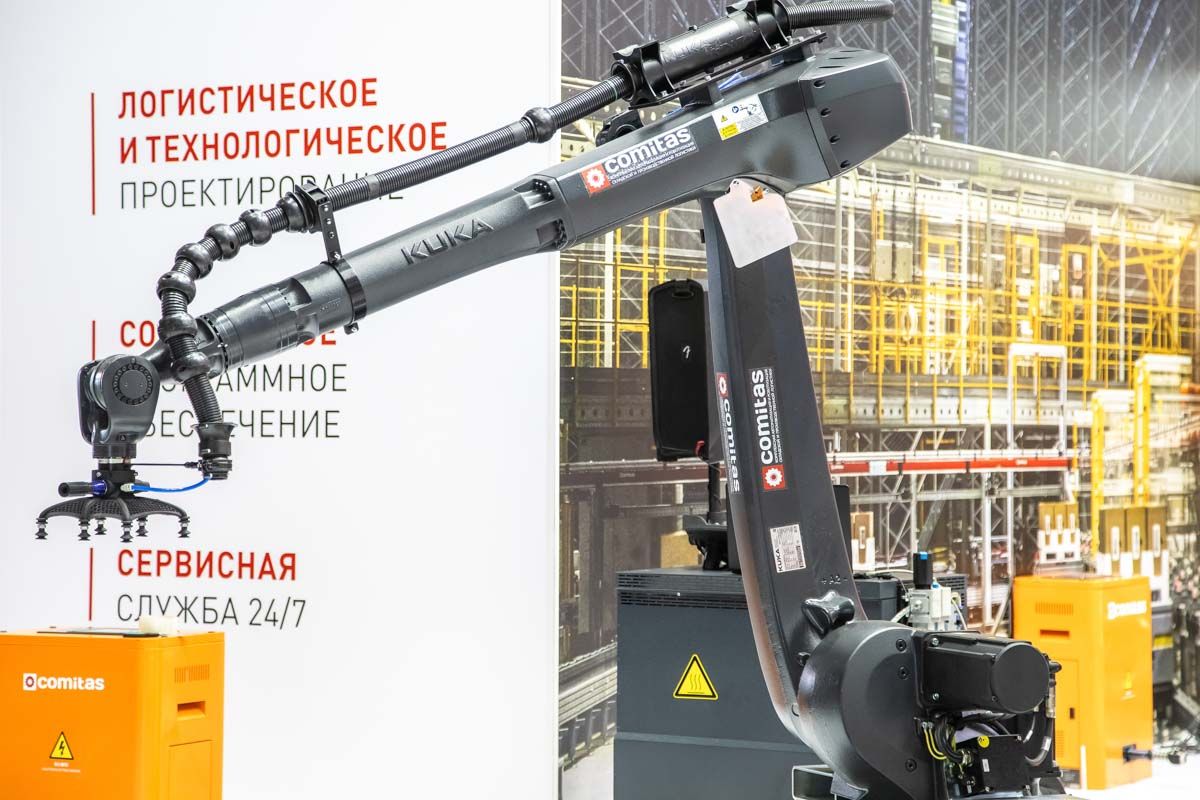
Warehouse automation, including the use of robots and drones to move goods, remains an important trend in the market. On average, the use of robotic solutions helps reduce labour costs by up to 30%, according to a McKinsey report. Warehouse management systems (WMS) increase order processing accuracy and improve warehouse resource management.
In addition, warehouse robotisation reduces labour requirements, speeds up processes and lowers costs.
For example, the use of drones for small parcel delivery is already being tested in Moscow, St. Petersburg and other large cities where traffic congestion and transport infrastructure overload are particularly acute problems.
3. Environmental friendliness and sustainable development
In Russia, the global shift towards environmental sustainability in logistics may intensify. According to RBC Companies, in 2025, the share of ‘green’ warehouses in Russia will reach 10%. The introduction of environmentally friendly methods of delivery and warehouse management includes:
Electric transport — the use of electric vans and trucks for inter-city and urban transport.
Route optimisation — the use of algorithms to find the most environmentally friendly routes with minimal emissions.
Eco-friendly packaging and waste disposal — the introduction of standards for packaging recycling.
4. Development of multimodal transport
Multimodal transport will become the backbone of logistics in Russia in 2025, helping to optimise routes, costs and delivery times. According to RBC, there is steady demand for deliveries between China and Russia, India and Russia, as well as for domestic routes combining rail and road transport. Experts note that the flexibility of multimodal solutions is particularly in demand amid sanctions and growing demand for alternative routes.
5. Growth of online commerce
E-commerce continues to grow: its market volume in Russia increased approximately 7.5 times between 2019 and 2024, to 12.6 trillion rubles. These figures are provided in a study by Yakov and Partners. In 2025, the e-commerce market may also exceed 11 trillion roubles, according to Data Insight.
Against this backdrop, particular attention will be paid to optimising ‘last mile delivery’. Companies are already looking for new solutions:
The development of a network of order pick-up points (OVPs) and micro-format warehouses will help speed up delivery and reduce costs.
Hybrid delivery models (various methods, including the use of drones, robots, etc.).
6. Development of infrastructure and logistics hubs
In 2025, Russia's logistics infrastructure will continue to develop, especially in remote and hard-to-reach regions. One important aspect is the creation of logistics hubs in Siberia for the efficient redistribution of goods.
In addition, emphasis is being placed on modernising the railway infrastructure. For example, thanks to the partial completion of the Eastern Range, the transport capacity of the Baikal-Amur Mainline and the eastern section of the Trans-Siberian Mainline increased to 180 million tonnes in 2025, according to Rossiyskaya Gazeta.
The development of seaports in the Far East and transport corridors through Kazakhstan are also linked to the reorientation of freight flows to China and other countries. ‘Russia will most likely continue to optimise the Northern Sea Route and the North-South route to meet its import and export needs,’ said Diana Shevtsova, an expert on logistics, exports and foreign economic activity at TD Tekhnohim Group LLC.
7. Localisation and reduction of supply chains
Since 2022, more and more Russian companies have been seeking to localise production and logistics in order to reduce their dependence on international supplies. This trend is continuing in 2025. New warehouse facilities are appearing in regions such as the Moscow Region, Adygea, Surgut, Dzerzhinsk and Omsk. In addition, companies are increasingly opting for local developments and services.
The introduction and adaptation of innovative global solutions, such as process automation, the use of artificial intelligence and infrastructure development, will ensure stable growth for the market. At the same time, Russian logistics will increasingly focus on localisation and supply chain reduction, which will increase the independence and flexibility of the industry.
TransRussia | SkladTech – an exhibition for leaders in transport logistics, warehouse equipment and technologies

For almost 30 years, TransRussia has remained the largest event in Russia and the CIS in the field of logistics. It is accompanied by SkladTech, a specialised exhibition dedicated to warehouse equipment and technologies. In 2025, 597 companies presented their solutions at TransRussia | SkladTech, and the event was attended by more than 30,400 industry professionals, including more than 15,000 first-time visitors.
According to a survey of participants, the exhibition is useful for business:
-98% of exhibitors were satisfied with their participation.
-76% were able to establish new business contacts and attract partners.
-63% collected more than 100 questionnaires during the three days of the exhibition.
The next TransRussia | SkladTech exhibition will take place on 17–19 March 2026 in Moscow, at the Crocus Expo IEC. Reserve your place among the industry leaders!