


16-18 March 2027Crocus Expo, Pavilion 3
Digital platforms, new regulations, robotics, and the growing role of sustainable supply chains will shape the logistics market in 2026.
In 2026, the logistics industry will reach a point where previous management models are no longer a one-size-fits-all solution. For transport and logistics operators, freight forwarders, cargo owners, manufacturing, and trading companies, this means the need not just for targeted adjustments, but for a more comprehensive approach to the entire supply chain—from document flow and routing to warehouse, data, and risk management.
The market situation in 2025 showed that logistics is developing in several directions simultaneously. On the one hand, e-commerce continues to grow: by the end of 2025, the volume of online trade in Russia amounted to 11.5 trillion rubles, a 28% increase from the previous year. This growth in e-commerce, in turn, increases the demands on logistics, delivery speed, and the quality of operational services.
On the other hand, the market for classic transport logistics remains more tense: by the end of 2025, cargo turnover at Russian seaports decreased by 0.4%, while transportation via the Russian Railways network decreased by 5.6%.
1. Digitalization is becoming an essential part of the logistics model
In 2026, digital transformation will finally move beyond the category of competitive advantages and become a mandatory requirement for market operations. One of the key milestones is September 1, 2026, when the use of the electronic consignment note (ECW) will become mandatory for all participants in the freight transportation industry, including shippers, freight forwarders, carriers, and consignees. This marks a complete transition to a digital document that replaces the paper consignment note, records the transportation contract, and is used for settlements between the parties.
You can learn more about the practical aspects of the transition to mandatory electronic toll collection at a webinar on TransRussia Connect.
At the same time, a new state digital environment is being developed. The GosLog platform has already been launched, and on March 1, 2026, the register of notifications on freight forwarding activities became operational on its basis. The next step is the conversion of a significant portion of freight forwarding documents to electronic format via the State Information System for Electronic Documentation (GIS EPD) starting September 1, 2026.
For businesses, the digital transition is no longer just a matter of formal compliance. "In fact, there are quite a lot of questions today. That's why it's important for companies to get involved in the process now, test solutions, and participate in discussions of practical cases ," noted Sergey Maksimov, President of the Union of Transport Workers, Forwarders, and Logisticians of Siberia and a member of the public council under the Russian Ministry of Transport.
2. Risk management and intelligent routing become the basis for sustainable logistics
In 2026, the logistics model in which the minimum bid is the primary selling point for a contractor is becoming less relevant. Against the backdrop of an unstable external environment, regulatory changes, and the high cost of errors, the market is shifting toward a more pragmatic approach: businesses evaluate not only the cost of a service but also the ability to ensure consistent deadlines, the legal correctness of operations, and the readiness to quickly respond to disruptions. This is why logistics is increasingly viewed as a risk management system.
A practical extension of this approach is the development of intelligent routing and analytics. In transport logistics, the value of solutions that manage not just individual operations, but the entire supply chain economy is growing. This is especially noticeable against the backdrop of increasing demands for speed and service quality. According to research on e-commerce logistics in 2025, for more than 80% of companies in the FMCG sector, delivery speed remains one of the top customer expectations.
In response, the market is increasingly adopting tools that calculate routes based not only on distance but also on real-world constraints: traffic conditions, warehouse and pickup point operating hours, delivery zone characteristics, and the likelihood of deviations during order fulfillment. According to Ilya Sinchurin, Sales Director at Yandex Delivery, using advanced routing and analytics systems can reduce logistics costs by approximately 15–20%.
3. Hybrid routes are becoming a response to instability
Another trend is the development of flexible logistics schemes. While companies could previously rely on a single, proven route for extended periods, the ability to quickly adapt delivery schedules based on conditions on a specific route is now becoming increasingly important.
According to Artem Valeev, CEO of FTS-Service Group, the transportation structure already reflects this shift: approximately 40% is rail, approximately 30% is sea freight, 17% is road freight, and 13% is air freight. This demonstrates that the market is increasingly using combinations of different modes of transport, balancing the choice not only with the rate but also with the reliability of the channel, response time, and route stability.
4. Artificial intelligence and unmanned technologies are entering practical application
In 2026, artificial intelligence will become a practical tool for everyday work. Its role is no longer limited to individual pilots: the market is gradually shifting toward operational integration of AI into supply chain management. Such solutions help calculate routes faster, identify the risk of delays, find errors in documents, analyze deviations in cargo movement, and more accurately predict developments across the entire logistics chain. At the same time, artificial intelligence does not replace professional expertise, but rather enhances it.
The development of digital twins and AI assistants deserves special attention. A digital twin in logistics is no longer a static process model but rather a working tool that updates along with the actual flows of goods, orders, transport, and warehouse operations. This allows not only for analyzing past changes but also for proactively assessing the consequences of decisions, choosing a more sustainable course of action.
Another prominent area is driverless transport. As Alexey Nikolaevich Shilo, Deputy Minister of Transport of the Russian Federation, noted at the TransRussia 2026 discussion session, businesses are showing strong interest in driverless transportation, but their large-scale implementation requires the absence of a human in the cabin, reliable communications, a regulatory framework, and the versatility of the vehicles. He stated that by 2028, the industry could fully utilize driverless vehicles.
5. Warehouse robotics enters a new stage of maturity
Robotization of warehouse logistics is a logical next step in the industry's development. According to automation market analysts , by 2025, annual investment in robotization and digitalization of warehouse processes in Russia will reach approximately 20 billion rubles. The use of modern control systems and robotics allows companies to reduce labor costs by up to 30% and the rate of order picking errors by 40%.
Growing interest in warehouse automation, robotics, and digital solutions is clearly demonstrated by the development of the SkladTech special exhibition, which is held concurrently with the TransRussia exhibition and brings together manufacturers and suppliers of warehouse equipment and technologies.
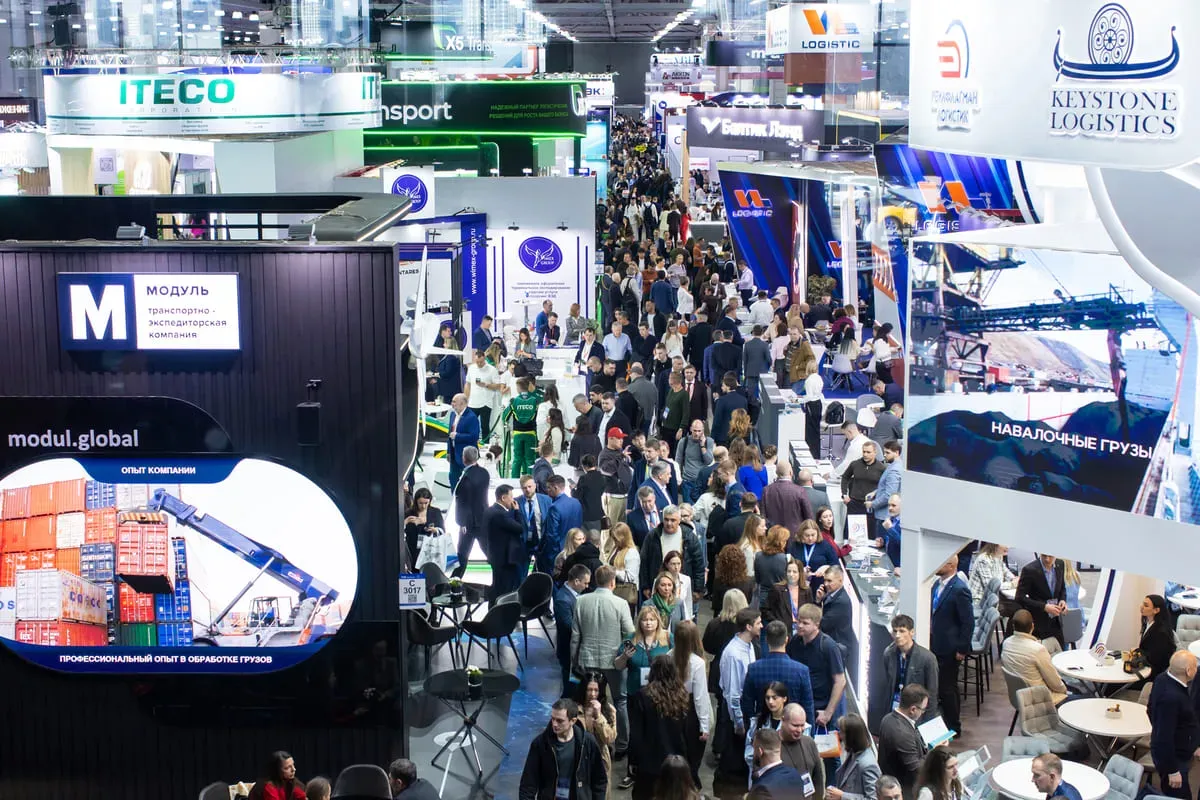
Every year, the market increasingly demands not only logistics services but also new technological solutions that can improve the manageability, transparency, and resilience of supply chains. Against this backdrop, participation in TransRussia is an opportunity to introduce yourself to a professional audience at a time when businesses are actively rethinking logistics models, seeking new contractors, digital solutions, and collaboration formats.
The TransRussia exhibition brings together the target audience for decision-making in the fields of transport, warehousing, and foreign trade logistics: executives and specialists from transport, logistics, and freight forwarding companies, as well as transport and warehousing logistics directors from major manufacturing companies, as well as wholesale and retail enterprises.
In 2026, more than 550 companies from 17 countries participated in the exhibition, including over 200 new participants. Over the three days of the exhibition, more than 27,000 people viewed exhibitors' solutions.
 |
